
THE SHORT VERSION
Find the earliest stage that is not supplying the next one. Empty stations and slow deliveries need different investigations.
The steps below are editorial suggestions to test in your own save.
Understand the chain
Use the documented chain below as a troubleshooting map. The diagram describes the sequence, not exact machine ratios, vehicle assignments or production rates. Those details must be checked in your current version.
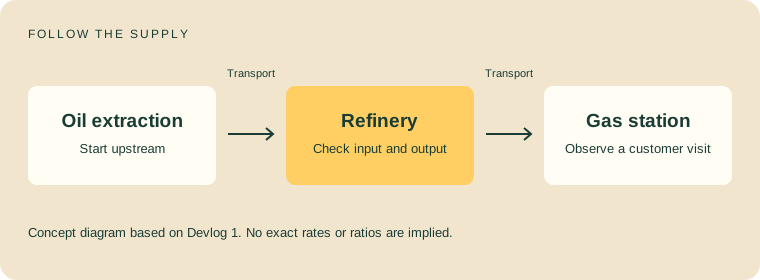
Check upstream first
Start at the source and inspect whatever status information the game exposes. Then follow a delivery toward the next stage. Identify where material stops progressing, rather than adding more of the final building because that is where you noticed the shortage.
- Extraction: is the source producing according to the game's status display?
- First transfer: does material reach the refinery?
- Refining: does processed output become available?
- Final transfer: does a delivery reach the station?
- Customer access: can a vehicle complete a visit to that station?
Distinguish shortage from delay
Compare what is waiting at the source with what is missing at the destination. If supply appears available upstream, watch the delivery journey and any queue along it. If every stage is empty, start further back in the chain.
Observe more than one delivery cycle before judging a change. A temporary refill can hide a repeating shortage. Keep a simple note of what empties first and whether the same pattern returns.
Run one controlled experiment
Make a save, choose one suspected constraint, and change only that element. Use the same station and a similar observation window to compare the result. If access is the issue, consult the traffic guide before increasing production.
Avoid changing fuel prices and the entire delivery route together. Even if the outcome improves, you will not know which change mattered or whether the same fix will work in the next district.
Three fuel symptoms, three different checks
Start from the symptom, then work backward until you find a stage with evidence of a problem. The same empty station can have several causes.
- Station empty; upstream output also absent → inspect extraction, transfer and refinery status in sequence. Test the first stage with an explicit warning or observed interruption.
- Station empty; refinery output available → follow a final delivery from departure to arrival. If it waits on the route, test that connection before increasing extraction.
- Station receives fuel but the customer still cannot finish → trace customer access, any visible service warning and the departure route. More production does not explain a blocked visit.
- Fuel arrives, then the station empties repeatedly → record the pattern over several deliveries. Compare production and delivery observations before choosing one capacity or route experiment.
Keep a short supply log
At each stage, record only what the game displays or what you directly observe. Use “not observed” when you have not seen a delivery; that is different from proving that no delivery exists.
After changing one stage, revisit the source, refinery, final delivery and customer journey. A refill is encouraging, but check whether the earlier shortage repeats before accepting the change.
- Source: displayed status and whether output is visible.
- Refinery transfer: delivery observed, delayed or not yet observed.
- Refinery: displayed warning and processed output, where available.
- Station delivery: arrival observed and where any delay begins.
- Customer: approach, use and departure observed.
- Result: original interruption resolved, still present or uncertain.
READY FOR THE NEXT CHANGE?
Your quick checklist
Tick these off while you inspect your save. Checks are temporary.
Sources & limits
- Car Park Capital · official Steam news & developer logs ↗Official developer descriptions · reviewed 2026-10-11
Launch announcement (October 9), Devlog 2 (June 5), and Devlog 1 (January 6). Pre-release descriptions can change; they do not establish exact launch-version balance.
Guide updated 12 Oct 2026. Source review dates appear above. Pre-release descriptions can change. These suggestions have not been tested in a played save. Full editorial policy.